




MUSCAT: Oman is developing a comprehensive artificial intelligence (AI) ecosystem underpinned by large-scale digital infrastructure, sovereign AI capabilities and innovation platforms, as the Sultanate positions itself as a regional hub for next-generation technologies.
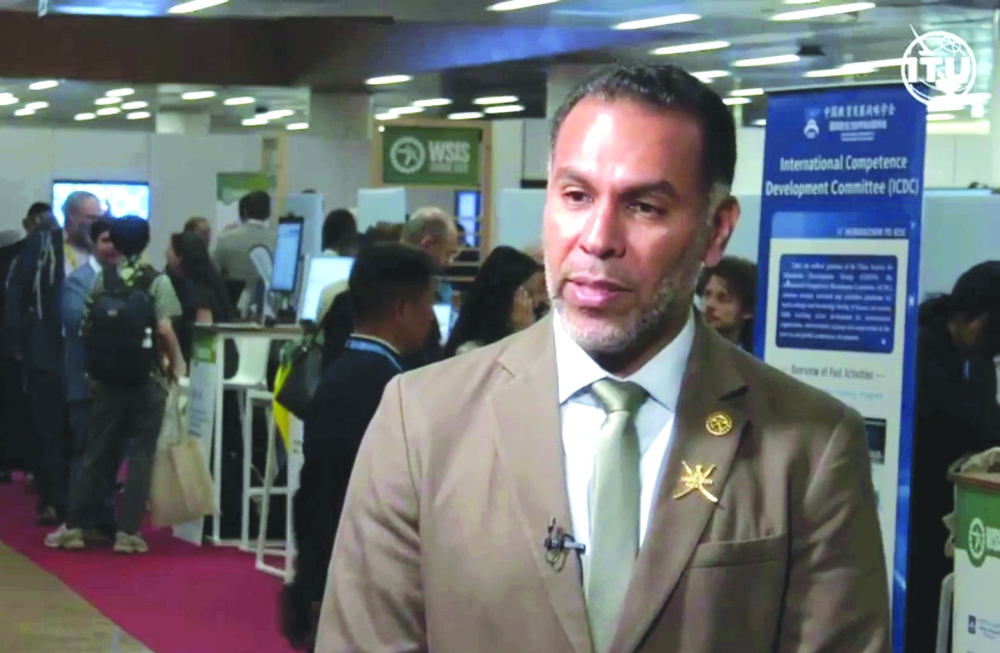
Speaking on the sidelines of the inaugural UN Global Dialogue on AI Governance held in Geneva recently, Dr Ali al Shidhani, Under-Secretary for Communications and Information Technology, highlighted Oman’s multi-layered approach to advancing AI, including the development of a “digital triangle” designed to support green AI infrastructure.
Dr Al Shidhani said Oman’s digital triangle will comprise three digital hubs with gigawatt-scale capacity to host green AI data centres, leveraging the country’s strategic connectivity through submarine cable networks and its growing renewable energy resources.
“If you look at the infrastructure layer, for example, Oman is developing a digital triangle,” he said. “We are developing three digital hubs with gigawatt capacity to host green AI data centres, banking on the richness of the submarine cables that are landing in Oman, as well as the diversity of renewable energy sources”.
Beyond infrastructure, Oman is advancing AI capabilities across the wider technology value chain. At the model layer, the Sultanate has developed a sovereign national large language model aimed at preserving Oman’s language, heritage and culture, while supporting the development of locally relevant AI applications.
At the application level, Oman has launched an AI Studio, described by Dr Al Shidhani as a “factory for AI ideas”, which supports innovators in transforming AI concepts into practical products and solutions.
The country is also establishing an AI economic zone following the issuance of a Royal Decree, creating a dedicated environment to attract entrepreneurs, researchers and innovators to develop AI-based solutions addressing real-world challenges.
“This AI zone will function as a magnet to bring together entrepreneurs, innovators and researchers to build new AI products and solutions to solve real-world problems,” Dr Al Shidhani said.
He noted that achieving the full potential of AI requires a balanced approach that combines technological advancement with responsible governance. While infrastructure, models and applications represent the visible elements of AI, he emphasised that governance and trust form the foundation required for sustainable growth.
“When we talk about AI, we often focus on the visible components of AI, like chips, models and applications,” he said. “But what’s equally important are the invisible components of AI, specifically governance and trust”.
Describing governance and trust as the elements that hold the AI ecosystem together, Dr Al Shidhani said: “Governance and trust, although invisible, are the glue that glues together the AI stack.”
He also stressed that the future development of AI cannot be driven by individual countries alone, highlighting the importance of international collaboration. In this context, Oman has launched the Green AI Alliance, bringing together government, private sector and academia, both locally and internationally, to develop sustainable AI solutions and create new economic opportunities.
“Governance is mandatory. Trust has to be grounded. Cooperation is essential and AI innovation is inevitable,” Dr Al Shidhani said. “These four components have to work together to spread the benefits of AI to the entire humanity".
Oman Observer is now on the WhatsApp channel. Click here